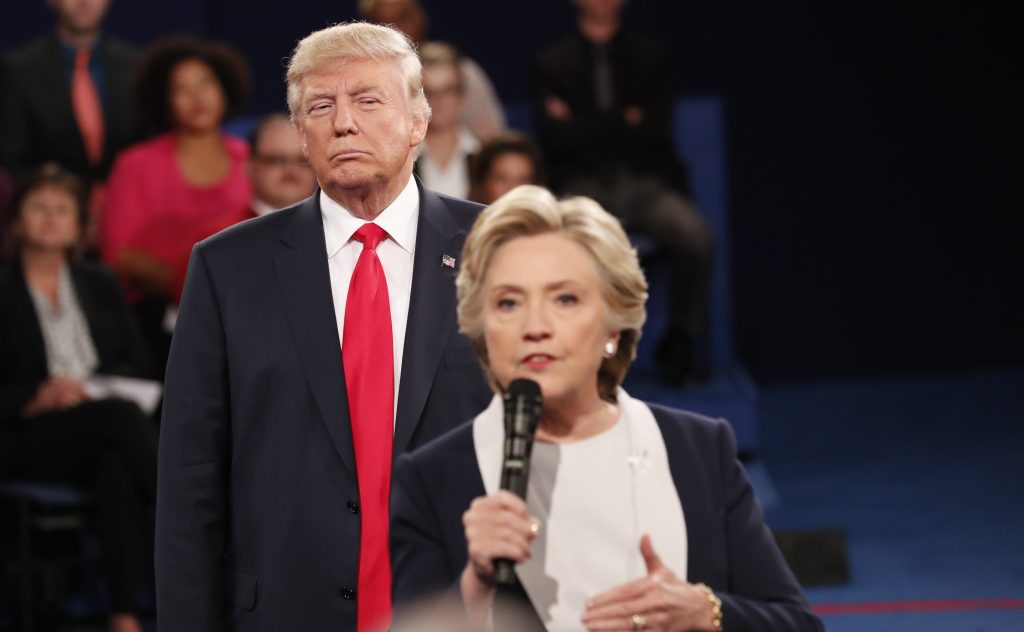
Scroll back with me to the presidential campaign of 2016, the so-called debates between the best qualified candidate ever to run for president, Hillary Clinton, and Biff Tannen You Know Who. Even with a decade of unprecedented political chaos intervening, those debates are memorable.
I thought I was watching Clinton destroy Trump, for varying reasons, in the first debate. She was prepared and articulate; he was a bully. He claimed she didn’t have the “stamina” to be president, and that not paying taxes made him smart. He did not follow the rules of debate, demanding more time and shouting over Clinton. I was convinced that she mopped the floor with him.
But it turned out that a lot of people found him purposeful. Or something. Remember all the Trump voters who love him because he “says what he thinks?”
An informal CNBC poll on its website found that 61% of people thought that Mr Trump won while 39% went for Mrs Clinton, but as CNBC itself points out, the poll is not scientific. A post-debate survey by Public Policy Polling of 1,002 debate-watchers found that 51% of national voters thought Mrs Clinton had won, with 40% choosing Mr Trump and 9% undecided.
There were two more debates, including a town hall format where Trump followed Mrs. Clinton around the stage, stalker-like, and the one exactly ten years ago where Hillary aptly pointed out that Putin preferred to have a puppet like Trump running the country and he snarled over her (again): You’re the puppet! You’re the puppet!
He also called her a nasty woman, and interrupted her three times as often as she broke into his answers. There was pundit talk of “male dominance.” And large percentages of viewers declared him the winner—not only of televised debates, but ultimately, at the polls.
Tough talk—name-calling, insinuations, intimidation, rudeness, shouting, domination, misleading statements bleeding into vicious lies. Why do we admire the aggressive blowhard? And what are we teaching our kids to emulate?
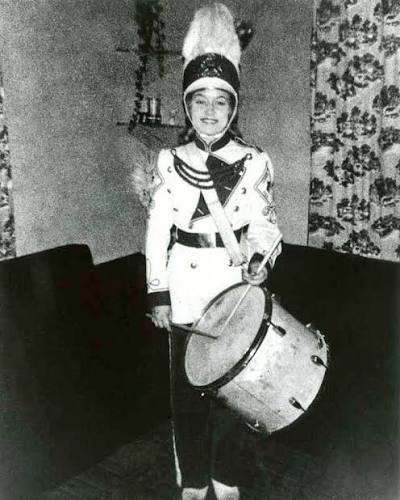
As a person whose entire professional career was driven by the goal of building cooperative communities of students, this is distressing to me. Of course, my secondary students had conflicts—talk to me about color guard spats at band camp sometime—but using civil language and considering the feelings of people in your chosen group, the band, were touchstones.
And civil language begins with leadership—teachers modeling both thoughtful disagreement and problem-solving. If the band director is always yelling at the kids, eventually they’re going to yell back. Then quit.
‘Former President Bill Clinton famously warned fellow Democrats that voters prefer “strong and wrong” over “weak but right.” His point was that tough talk resonates so powerfully among voters — especially low-information independents and moderates with weak ties to either major party — that strength can mask and even compensate for bad policies or poor governance.
Clinton’s mantra was a thinly veiled reference to George W. Bush’s governing failures, yet his warning is even more applicable during the Trump era.’
Remember “Boots vs. Flip-flops”—George Dubya cuttin’ brush in Crawford, Texas, while John Kerry went windsurfing? Which was supposed to prove that fumble-tongued Bush was a real man? When you look at the attack ads on James Talarico, nothing seems to have changed in TX, in the strong-and-wrong category.
It’s hard to even consider Vivek Ramaswamy’s ads against Amy Acton as ‘tough talk.’ They’re evil, abhorrent and socially damaging. And false, too—but remember that strong and wrong works on low-information voters. And we’ve certainly got plenty of those.
Pause.
So—after all my high-minded blah-blah about odious tough talk, and building community, I come here to confess my joy at seeing Democrats—finally—clapping back.
Barack Obama, tonight, speaking here in Michigan: “That well-known evil empire Canada. That historical adversary of ours. Canada! *laughs* It’s your neighbor. It’s a few minutes’ drive over the bridge! These are the people who gave us Martin Short and maple syrup. They are the nicest people! And somehow we’ve gotten them so mad.”
Obama’s genius is being funny while telling pointed truths. But there are other Democrats who have stepped out—using humor, but also biting accusation, righteous anger and verbal snark. In fact, I started a list, last year, when Gavin Newsom (or more likely, Gavin Newsom’s creative college intern) was mocking Trump’s words and actions, on Twitter and Bluesky, to hilarious effect.
Every time I saw an articulate elected Democrat call out the current administration with clear language—“travel with Natalie”—I tried to write their name down. Bonus points for verbal and pictorial humor. More bonus points for acting like a leader.
I look at the list frequently (it’s up to two pages now), to see who is still talking, being quoted and grabbing attention (in an attention economy). Your mileage may vary, of course, but keeping a list of democracy defenders has been instructive for me.
This isn’t a horse-race evaluation for 2028. Who knows what the next two years will hold? But we do need to look for leadership—for the candidates and elected officials who will fearlessly describe the mess we’re in. And talk tough about what needs doing.
Who is both strong and right? And who will pursue justice, decency and order?